
On this page
- Riverside in brief
- What should you know about Riverside?
- What makes gutter work different here?
- What gutter setup tends to suit Riverside?
- How does the weather in Riverside treat gutters?
- How much gutter does a typical house in Riverside need?
- Which gutter jobs come up most in Riverside?
- Which roads, water and landmarks are close to Riverside?
- What should you look for on a house in Riverside?
- What happens when a contractor comes out?
- Nearby areas
Riverside in brief
| City | Everett, Snohomish County |
| Location | Northeast of downtown, above the Snohomish River |
| Overlay zone | Riverside, approved by the City Council in 2008 |
| Size | 24 blocks; about 450 homes |
| Contributing | About 83 percent of homes |
| Main era | 1903 to 1929 |
| Styles | Craftsman, American Foursquare, Colonial Revival |
What should you know about Riverside?
Historic Everett calls Riverside the city's oldest neighborhood, dating from 1892, and Wikipedia describes it as residential streets northeast of downtown with a historic district. In 2008 the City Council approved a historic overlay covering 24 blocks, after a church sought to demolish older rental houses on Baker Avenue. The city's staff report counted about 450 homes in the area, 83 percent of them contributing structures.
According to the city's design guidelines, the overlay district is made up mostly of houses built from 1903 to 1929, when Everett's population boomed, and most of them are Craftsman, American Foursquare or Colonial Revival. Wide, tree-lined streets and mature yards are part of the neighborhood's character.
What makes gutter work different here?
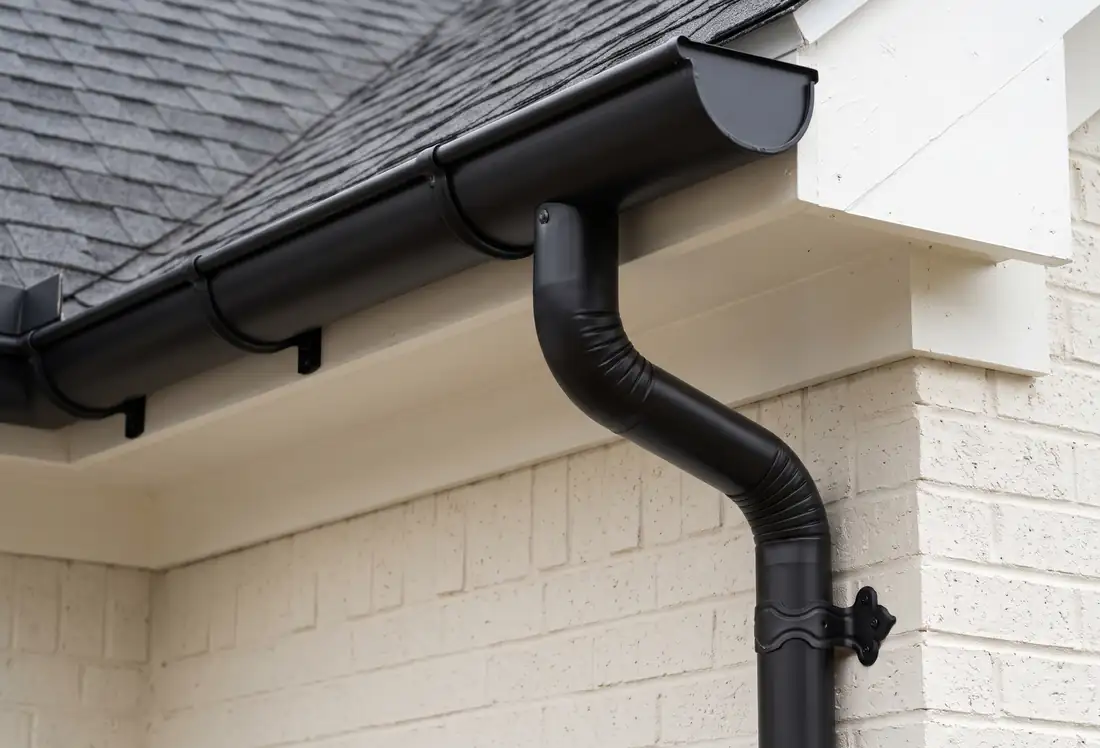
Period houses. Many houses suit half-round gutters on brackets, or simple K-style that does not fight the trim. Exposed rafter tails on Craftsman houses can carry brackets better than thin fascia.
Overlay review. Exterior work in the overlay that needs a building permit is reviewed under the overlay rules. Talk to the city before changing visible gutter details on a contributing house.
Old drainage. Like much of north Everett, parts of Riverside drain to the city's combined sewer. Check with the city before changing downspout connections.
What gutter setup tends to suit Riverside?
Riverside houses tend to need fascia or rafter-tail repair, a period-appropriate profile and attention to old drain connections.
| Usual choice in Riverside | |
|---|---|
| Gutter | 5 to 6-inch half-round or 5-inch K-style |
| Metal | .032 aluminum or copper |
| Downspouts | 3-inch round or 2x3; 3x4 on larger roofs |
| Fastening | Brackets or hidden hangers into sound wood |
| Guards | Micro-mesh under the big street trees |
| Cleaning | Twice a year, fall and spring |
| Discharge | Check old drain and sewer connections with the city |
| Main risks | Old fascia, leaking corners, overflow under trees |
| Rules | Riverside historic overlay review for permitted exterior work |
How does the weather in Riverside treat gutters?
Riverside gets the mild, damp marine climate of the Puget Sound lowlands. Everett's 1991 to 2020 normals, as tabled on Wikipedia, come to 39.67 inches of precipitation a year spread over about 170 wet days, with November the wettest month at 5.56 inches and August the driest at 0.93. That is less rain than the reputation suggests, but it falls on most days from October to April, so gutters rarely get a chance to dry, and moss and needles have months to build up. The year usually goes like this:
| Months | What gutters in Riverside are dealing with |
|---|---|
| October to December | The wet season builds; November is the wettest month on the normals. Windstorms arrive with the first big lows, and big street trees drop their leaves |
| January to March | Long spells of light rain, gray days and the occasional snow or freeze, like the wet snow of February 2019; moss is at its most active |
| April to June | Showers taper off; street trees drop seed and catkins |
| July to September | The dry season, with August the driest month. the dry months suit repainting and fascia repair; it is the easiest time of year to book installs and repairs |
How much gutter does a typical house in Riverside need?
Gutter is priced by the foot, so eave length drives most of a quote. Each row takes a common eave length for houses here and applies the national per-foot installed figures from Angi. Read them as an order of magnitude rather than a price.
| House | Typical eave length | Gutter | At national prices |
|---|---|---|---|
| Bungalow | 120 to 160 ft | 5-inch seamless aluminum | about $1,080 to $2,080 |
| Foursquare | 170 to 220 ft | 6-inch seamless aluminum | about $2,040 to $3,960 |
| Larger Colonial Revival | 180 to 240 ft | 6-inch seamless aluminum | about $2,160 to $4,320 |
Removing old gutters, replacing rotten fascia, adding downspouts or tightlines, fitting guards and working on tall or steep walls all push those numbers up.
Which gutter jobs come up most in Riverside?
| House | Usual problem | Typical fix |
|---|---|---|
| Craftsman bungalow | Spiked K-style on exposed rafters | Half-round on brackets into rafter tails |
| American Foursquare | Tall walls, corner leaks | 6-inch with resealed miters |
| Colonial Revival | Mismatched gutter profile | Ogee or half-round in a muted color |
| House on an old drain | Downspout backing up | Clear or reroute after checking with the city |
Which roads, water and landmarks are close to Riverside?
- Roads: Broadway, Hewitt Avenue, Everett Avenue, Baker Avenue, Virginia Avenue
- Landmarks: The Riverside historic overlay district
- Water: The Snohomish River to the east
- History: Overlay approved in 2008; homes mostly 1903 to 1929
- Neighbors: North Everett, downtown Everett, Lowell
What should you look for on a house in Riverside?
- Water spilling over the front edge in an ordinary rain instead of running to the downspout.
- Green moss or seedlings growing in the trough, or a line of moss on the roof just above the gutter.
- Dark streaks, peeling paint or soft spots on the fascia board and soffit.
- A run that bows between hangers or tips away from the roof.
- Downspouts that stay dry in steady rain, or that empty right at the foundation.
- Damp in the crawl space, or water standing along the house long after a storm.
What happens when a contractor comes out?
Expect the contractor to inspect each run both from the yard and up a ladder, push on the fascia to find rot, checks for a drip edge, and traces each downspout to where it lets go, whether that is a splash block, a tightline or an old drain. They talk through what they found and send their own written quote, often pricing a repair and a replacement side by side. Nothing is agreed on the call; you decide once the quote is in front of you.