
On this page
- What kinds of commercial buildings need gutter work?
- Why is commercial drainage different?
- Which systems are used?
- What do owners and managers need to plan for?
- What does commercial gutter work cost?
- How should commercial gutters be maintained?
- Who should be involved in a commercial project?
- What questions should owners ask?
- Materials for commercial gutters
- Commercial work around Everett
- What does a commercial site visit include?
- Common commercial problems
- Areas served
What kinds of commercial buildings need gutter work?
| Building | Common systems | Typical problems |
|---|---|---|
| Retail strip and offices | Large K-style, box gutters, scuppers | Clogged scuppers, overflow over entrances |
| Churches | Long runs, tall walls, sometimes copper | Access, high walls, older fascia |
| Apartment buildings | Long runs, many downspouts | Overflow onto walkways and parking |
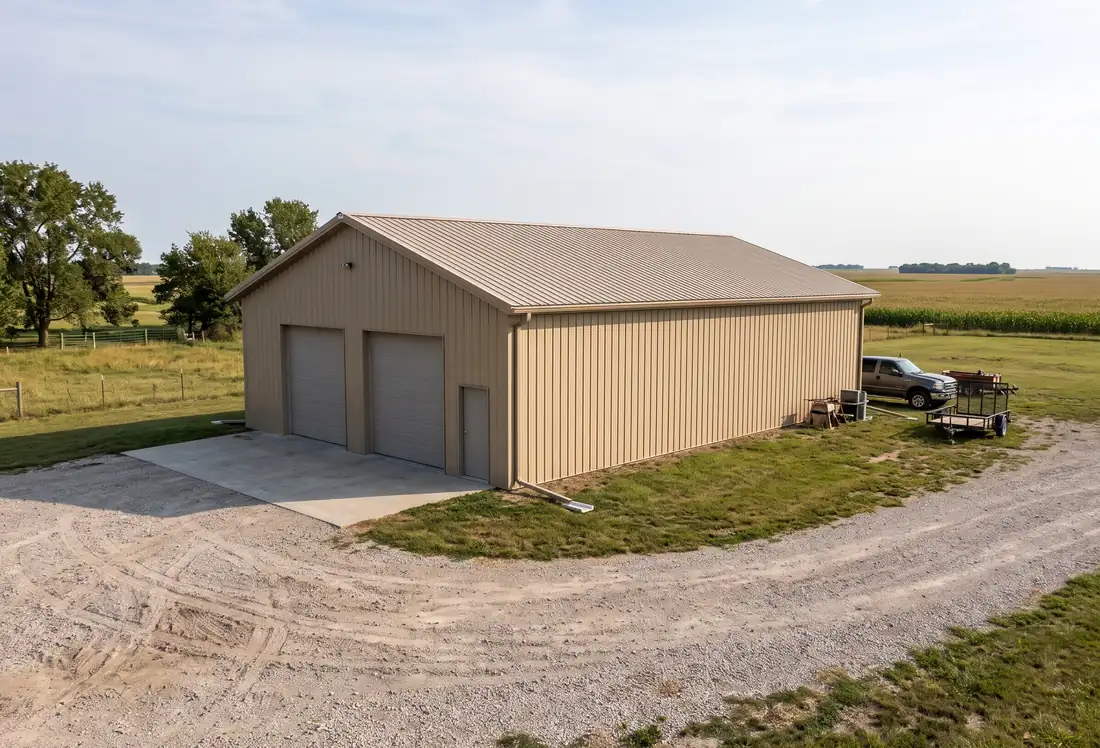
| Metal buildings and shops | Eave gutters on steel roofs | Fast runoff, undersized gutters |
| Schools and public buildings | Mixed flat and pitched roofs | Large roof areas, maintenance gaps |
| Marine and industrial buildings | Heavy-gauge metal | Corrosion near salt water |
Why is commercial drainage different?
A commercial roof can be many thousands of square feet, often with low slope and parapets. All of it drains to a few points, so gutters, scuppers and downspouts have to handle large volumes. In Everett, the challenge is less about cloudbursts and more about volume over time: rain on about 170 days a year, with moss and needles collecting on low-slope roofs. A clogged scupper on a flat roof can pond water for weeks.
Discharge matters too. Much of north Everett is served by a combined sewer, which serves about 6,400 acres of the north part of the city, and city stormwater rules apply to how roof water is handled on many sites. Building owners planning new drainage should talk to the city early.
Which systems are used?
| System | What it is | Where |
|---|---|---|
| Large K-style | 6 to 8-inch eave gutters | Pitched commercial roofs |
| Box gutter | Square, high-capacity gutter | Large roofs, metal buildings |
| Scupper and conductor head | Opening in a parapet into a collector box | Flat roofs |
| Built-in gutter | Lined trough in the roof structure | Older and historic commercial buildings |
| Large downspouts | 4x5 inch, 4 and 5-inch round, or larger | Big roof areas |
What do owners and managers need to plan for?
- Access: lifts, scaffolding or roof access, and safe work around entrances.
- Scheduling: work staged to keep the building open.
- Permits: where drainage or structure changes.
- Materials: heavier gauge near the water, where salt air speeds corrosion.
- Maintenance: a cleaning schedule tied to trees and seasons.
- Documentation: written specs and warranties for the building file.
What does commercial gutter work cost?
Commercial jobs are quoted after a site visit, based on roof area, gutter size and material, number of downspouts and scuppers, height, access equipment and any drainage changes. National residential prices are not a guide here; ask for a written, itemized quote.
How should commercial gutters be maintained?
| Task | How often |
|---|---|
| Clear gutters, scuppers and roof drains | At least twice a year; more under trees |
| Inspect after windstorms | After each significant storm |
| Check downspout straps and boots | Yearly |
| Look for corrosion and leaking seams | Yearly |
| Check roof membrane at scuppers | Yearly, with the roofer |
Flat and low-slope roofs collect needles, moss and grit that wash to scuppers and drains. A single clogged scupper can pond water across a large area, which loads the structure and finds its way into seams. Keeping a simple maintenance log for the building helps catch problems before they become leaks.
Who should be involved in a commercial project?
On larger buildings, gutter work often overlaps with roofing, building management and sometimes engineering. Roof drains, scuppers and conductor heads interact with the roof membrane, so coordinating with the roofer matters. Where drainage is changed or new impervious area is added, city stormwater rules may apply. On older commercial buildings in downtown Everett, built-in gutters and copper details may need specialist repair rather than replacement.
What questions should owners ask?
- What gutter size, metal and thickness are you proposing, and why?
- How many downspouts and scuppers, and where do they discharge?
- How will work be staged around entrances and parking?
- What access equipment is needed, and who provides it?
- Will any permits be needed?
- What warranty applies to workmanship and materials?
Materials for commercial gutters
| Material | Why it is used |
|---|---|
| Heavy-gauge aluminum | Light, rust-free, formed in large profiles |
| Galvalume or galvanized steel | Stiff and impact-resistant on industrial buildings |
| Copper | Historic and high-end buildings |
| Lined built-in gutters | Original details on older downtown buildings |
Near salt water, heavier metal and good finishes extend the life of commercial systems.
Commercial work around Everett
| Area | Typical buildings |
|---|---|
| Downtown Everett | Older commercial blocks with built-in gutters and scuppers |
| Evergreen Way and Broadway | Retail and offices with large roofs |
| Marysville | Retail centers and apartments |
| Arlington | Industrial and metal buildings near the airport |
| Mukilteo | Offices and buildings exposed to salt air |
What does a commercial site visit include?
The contractor walks the roof where safe, measures runs and drainage points, checks scuppers, conductor heads and roof drains, looks at downspout discharge, and notes access requirements. They then prepare a written proposal with specifications, scheduling and any permit needs.
Common commercial problems
| Problem | Likely cause | Fix |
|---|---|---|
| Water over a storefront | Undersized gutter or clogged outlet | Larger outlet, cleaning, guard |
| Ponding on a flat roof | Blocked scupper or drain | Clear and screen the scupper |
| Corroded gutters | Standing water, salt air, thin metal | Replace with heavier metal |
| Downspouts torn off | Vehicle impact, wind | Boot guards and stronger straps |
| Ice or icicles in cold snaps | Poor drainage, heat loss | Improve slope and drainage |
Areas served
Commercial calls come from downtown Everett and the business areas along Evergreen Way, Broadway and the I-5 corridor, and from Marysville, Lake Stevens, Mukilteo, Mill Creek, Arlington and nearby towns.