
On this page
- What clogs Everett gutters?
- When should gutters be cleaned?
- What does a proper cleaning involve?
- Why is moss a special problem here?
- Is it safe to clean your own gutters?
- What else do people ask about gutter cleaning?
- Where around Everett does gutter cleaning matter most?
- What is the best first step?
- What will a contractor note while cleaning?
- What makes a good cleaning visit?
- Cleaning around Everett
- Cleaning or guards?
- What does cleaning cost?
- Where around Everett do gutters clog fastest?
What clogs Everett gutters?
| Debris | Source | When |
|---|---|---|
| Short needles | Douglas fir, western hemlock | All year; most in fall and after wind |
| Scale sprays and seed | Western red cedar | Fall and winter |
| Cones and twigs | Firs and pines | After storms |
| Big leaves | Bigleaf maple, red alder | October and November |
| Winged seeds | Maples | Spring |
| Catkins and cotton | Alder, cottonwood | Spring |
| Moss mats | Shaded roofs | Wet season |
| Shingle granules | Older asphalt roofs | All year |
When should gutters be cleaned?
| Time of year | Why |
|---|---|
| Late October to November | After the main leaf and needle drop, as the wettest month arrives |
| After a big windstorm | Storms strip needles, cones and twigs into gutters all at once |
| Late spring | Clears maple seed, catkins and moss shed over winter |
| Late summer | Optional; checks everything before the wet season starts |
Everett's wettest month on the normals is November, at 5.56 inches. Gutters packed with leaves and needles at that point will overflow most days, so a cleaning timed just before or during the main drop does the most good.
What does a proper cleaning involve?
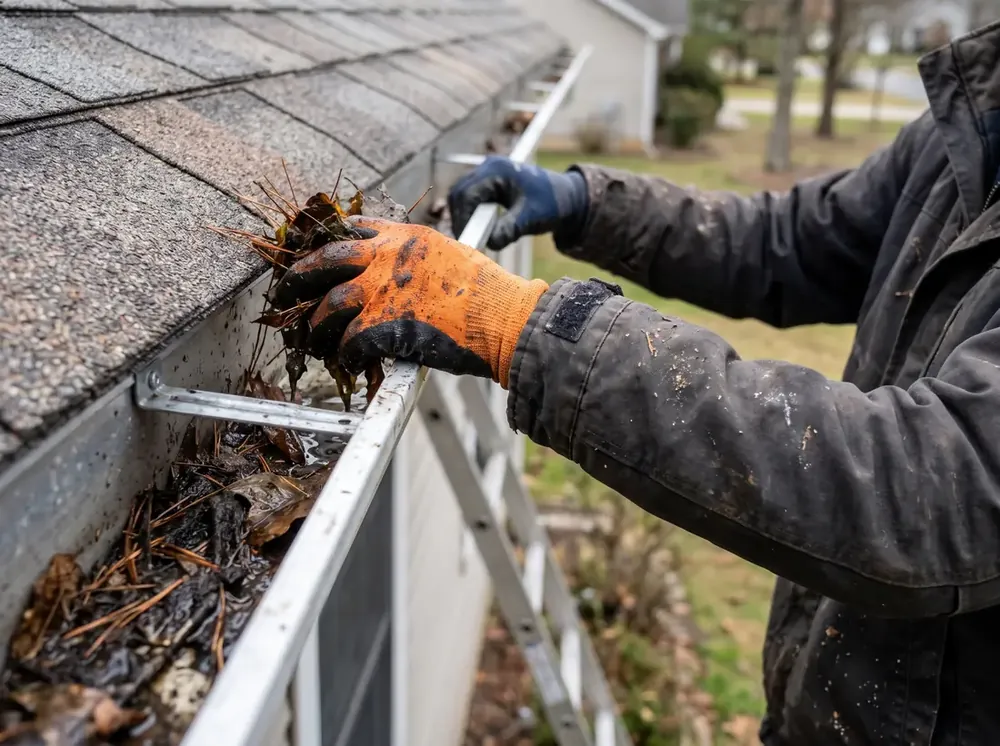
- Clearing the trough by hand, run by run, rather than blowing debris onto the roof or lawn.
- Flushing each downspout and clearing elbows, where needles and moss lodge.
- Running water to check every run drains to its outlet.
- Checking joints and hangers for leaks and looseness.
- Looking at the roof edge for moss, damaged shingles and missing drip edge.
- Bagging debris and leaving the area tidy.
- Reporting problems found, with photos if possible.
Why is moss a special problem here?
Moss grows readily on shaded roofs in the Puget Sound's long wet season. It traps water against shingles, and as it grows and dies it sheds into the gutters as dense green mats and fine organic sludge. That sludge clogs outlets and screens, holds water in the trough and can grow across a guard. Cleaning the gutters without dealing with the moss on the roof means the problem comes straight back. Ask the contractor about the roof edge when they clean, and consider moss treatment or removal as a separate job.
Is it safe to clean your own gutters?
Ladder falls are a real risk, and wet roofs and mossy shingles make them more likely. If you clean your own:
- Use a sturdy extension ladder on firm, level ground, and have someone foot it.
- Never lean the ladder on the gutter itself; use a stand-off.
- Stay off wet or mossy roofs entirely.
- Keep clear of power lines to the house.
- Leave two-story work to people with the right equipment.
What else do people ask about gutter cleaning?
| Question | Short answer |
|---|---|
| Do contractors clean the roof too? | Some do; roof moss removal is usually a separate job |
| Should I be home during cleaning? | Not necessarily; ask the contractor |
| Do contractors haul debris? | Many bag and remove it; ask |
| Is cleaning needed with new gutters? | Yes; new gutters fill just like old ones |
Where around Everett does gutter cleaning matter most?
| Area | Why |
|---|---|
| Silver Lake | Conifers around houses |
| Lake Stevens | Wooded lots |
| Granite Falls | Forest close to houses |
What is the best first step?
Book the fall cleaning for after the main maple drop but before the heaviest November rain. Contractors' calendars fill quickly in October and November.
What will a contractor note while cleaning?
A cleaning visit is a good chance to spot trouble early. Contractors often note loose hangers, leaking corners, rot at the fascia, crushed downspouts, missing drip edge and moss building up on the lower roof. Asking for a short written note or photos of anything found helps you plan repairs for the dry season, when they are easiest to do.
What makes a good cleaning visit?
A good visit leaves gutters empty, downspouts flowing, debris gone from the property, and you with a short note of anything that needs attention. Ask whether the contractor checks for loose hangers and leaking corners while on the ladder, and whether small fixes such as refitting an elbow are included.
Cleaning around Everett
| Area | Main debris |
|---|---|
| North Everett | Street maple leaves |
| Mukilteo | Gulch maples and firs |
| Snohomish | Old street trees downtown |
| Arlington | Rural firs and cedars |
Cleaning or guards?
| Situation | Better choice |
|---|---|
| Few trees, gutters clog once a year | Annual or twice-yearly cleaning |
| Big conifers overhead, gutters clog several times a year | Micro-mesh guards, plus an occasional rinse |
| Two-story house, hard to reach | Guards to reduce trips up the ladder |
| Old gutters due for replacement | Replace and add guards at the same time |
See gutter guards and the how often to clean guide for more.
What does cleaning cost?
Cleaning is priced per visit, usually by the length of gutter, the number of stories and how full the gutters are. Downspout clearing, debris haul-away and moss work may be separate. Ask the contractor what is included, and whether they offer a discount for regular visits.
Where around Everett do gutters clog fastest?
| Area | Why |
|---|---|
| Silver Lake | Tall conifers around houses and the lake |
| View Ridge-Madison | Old trees near Forest Park and the gulches |
| Lake Stevens | Wooded lots and lakeshore trees |
| Granite Falls | Foothill forest close to houses |
| Mill Creek | Greenbelts and mature trees between streets |